
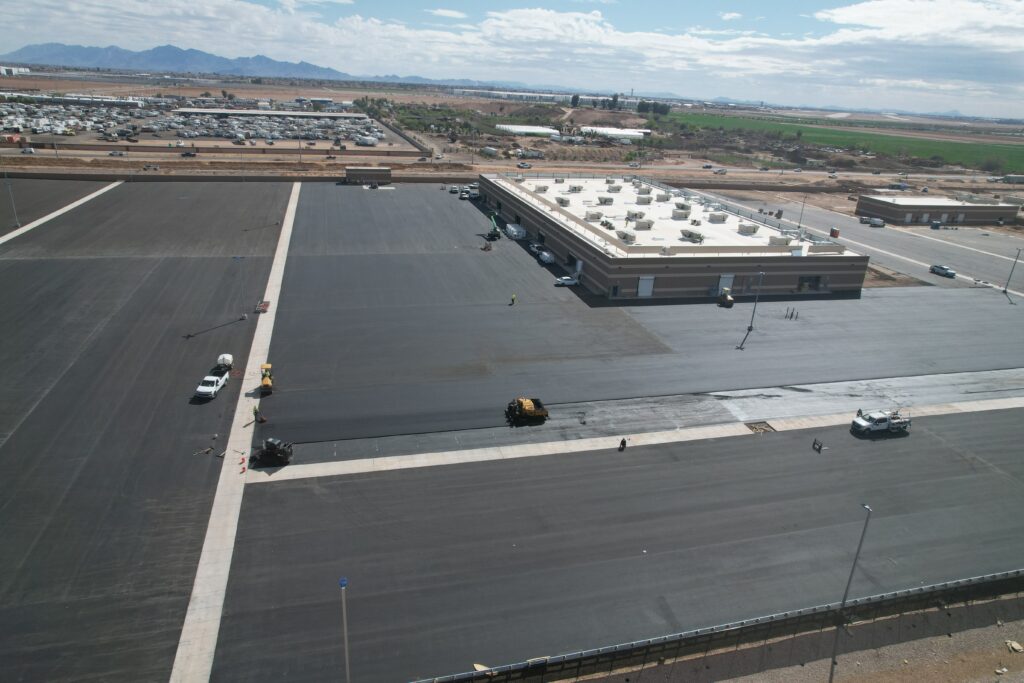
Yes! If your asphalt’s looking worn heading into fall, sealcoating before winter is one of the best moves you can make. Think about what our pavement puts up with out here: Snow one day, a Chinook the next, then a hard freeze overnight. That constant back-and-forth is brutal on asphalt, and a good sealcoat is the least expensive way to fight back and boost curb appeal. So let’s walk through what sealcoating does, when to book it, and what to do if you’ve left things a little late.
Key Takeaways
- Sealcoating adds a protective layer that limits water penetration and blocks UV rays.
- Early fall is the best time to sealcoat, before freeze-thaw damage sets in.
- Sealant needs warm, dry weather to cure properly.
- Too late to seal? Crack filling and drainage still protect your pavement.
What Does Sealcoating Do For Asphalt?
Sealcoating applies a protective layer, or asphalt sealer, over asphalt surfaces. It fills small voids in the asphalt pavement and forms a protective barrier that repels water, resists chemical damage, and blocks UV rays. Think of it as a sacrificial coat that takes the wear so your pavement doesn’t – on driveways and parking lots.
Why Winter Weather Is Hard On Asphalt
Alberta’s climate is tough on pavement. Asphalt is porous, so moisture infiltration is a constant threat. Freezing and thawing cause it to expand and contract. Southern Alberta repeatedly cycles through this freeze-thaw pattern, several times a day, thanks to Chinooks. Each cycle turns tiny cracks into potholes and costly repairs.
What Are the Benefits Of Sealcoating Before Winter?
Protecting asphalt from winter weather starts with a good sealcoat. Here’s what a fresh layer does:
Limits Water Penetration
A quality asphalt sealer keeps water from soaking into the base layer. Less water penetration means fewer cracks and far less freeze-thaw damage.
Helps Reduce Freeze-Thaw Damage
By filling cracks and sealing pores, sealcoating cuts off the path water uses to get in. No trapped moisture means no ice prying your pavement apart.
Protects The Surface From Salt & Chemicals
Winter brings road salt, de-icers, and chemical spills. A sealed surface resists chemical damage far better than bare asphalt; that’s where the benefits of parking lot sealcoating show on commercial asphalt.
When Is The Best Time To Sealcoat Asphalt Before Winter?
Early fall is the sweet spot. You want warm, dry days so the coat cures before temperatures drop, usually September or early October in Calgary. New asphalt is the exception; it needs about 90 days to cure first.
How Long Does Sealcoating Need To Dry Before Winter Weather?
Most sealcoating needs 24 to 48 hours of dry, warm weather to cure. High humidity levels and cool temperatures stretch that out. Give it a day or two of sun before vehicle traffic. Rushing the curing time leaves a weak finish.
How Can You Prepare Asphalt For Winter If It Is Too Late To Sealcoat?
Missed the window? You’ve still got options. Watch for signs your pavement needs winter preparation, such as fading colour, open cracks, and standing water. If those are present, it’s time to act:
Repair Cracks & Small Surface Damage
Crack sealing is your first line of defence. Filling cracks now stops water from getting in and freezing, so minor repairs prevent extensive damage later.
Address Drainage & Standing Water
Pooling water is asphalt’s enemy. Fix low spots and clear drainage, so water flows off instead of seeping in each freeze-thaw cycle.
Keep The Surface Clean & Clear of Debris
Sweep away leaves, dirt, and debris before the snow. A clean surface drains better and makes new cracks easier to spot, keeping preventative maintenance simple.
Prepare Your Asphalt For Winter With Infinity Paving
At Infinity Paving, our tenured crews handle crack filling, drainage, and professional asphalt sealcoating across Calgary and southern Alberta. If you need asphalt seal coating in Calgary before winter, get in touch with us for a free quote.
Frequently Asked Questions
How often should asphalt be sealcoated?
The recommended asphalt sealing frequency is every two to four years for most surfaces, sooner for asphalt with heavy traffic. Regular sealcoating extends pavement life and saves money.
Can you sealcoat asphalt in the fall?
Yes. Fall is often the best time for Calgary driveway sealing. Mild days and lower humidity make for ideal curing, as long as you seal before the first hard freeze.
What happens if it rains after sealcoating?
Rain during the curing process can wash away or thin the sealant, leaving an uneven finish. That’s why dry weather conditions matter for proper adhesion.
Can sealcoating prevent asphalt cracks?
Sealcoating won’t fix existing damage, but it slows new cracks by blocking moisture and UV exposure. Paired with crack filling, it keeps small problems from spreading.
Is sealcoating worth it in cold climates?
Absolutely. In a freeze-thaw climate like ours, the benefits of driveway sealcoating add up fast, and it’s much less expensive than a full replacement.
Protecting Your Asphalt Before Winter
A bit of prep now saves a lot of money later. Sealcoating services, crack sealing, and good drainage help your asphalt survive Alberta winters and look great by spring. Handle it before the cold hits, and your pavement lasts for years.